

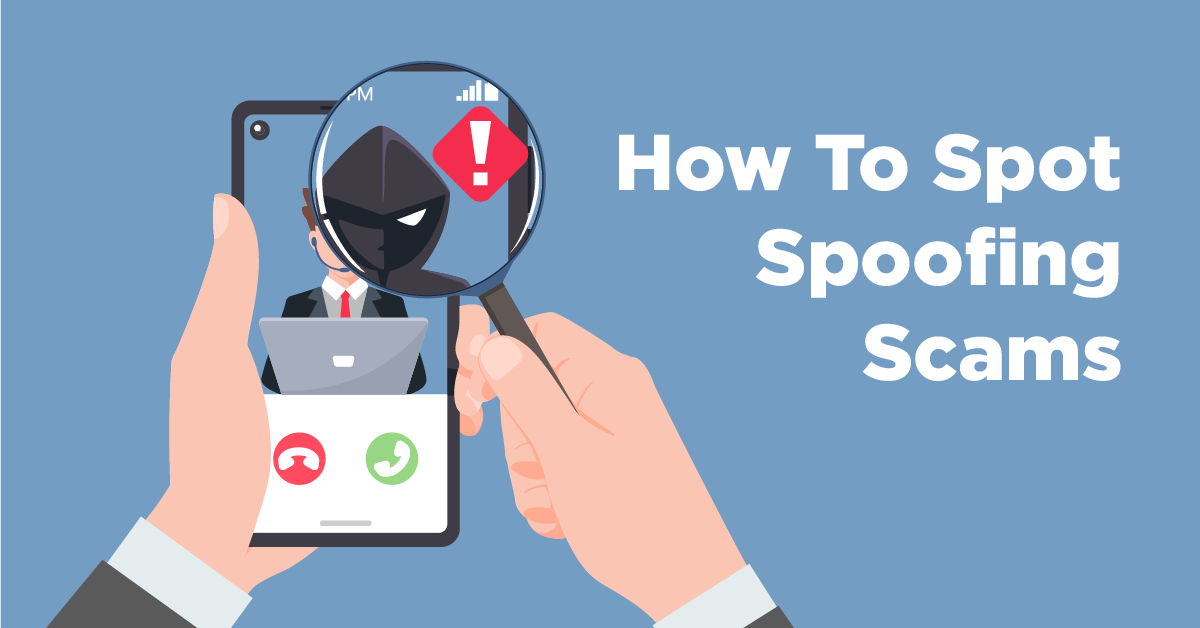
Your phone rings. The caller ID shows Sevenfold. The number matches. The person on the other end sounds professional and calm. Everything looks exactly the way it should.
But what if it isn’t?
Spoofing scams are built to look and sound legitimate. They are also becoming harder to detect every year. Understanding how they work is one of the most effective ways to protect yourself before you ever become a target.
What Is a Spoofing Scam?
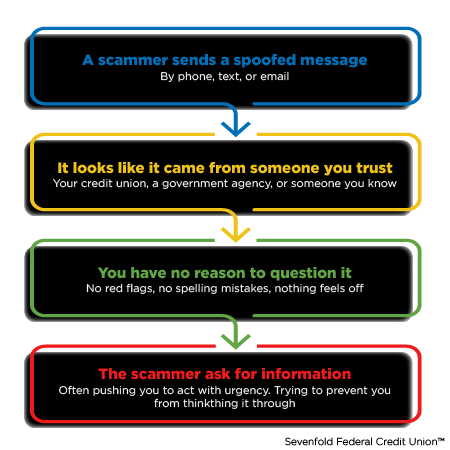
Spoofing happens when a scammer falsifies the contact information on a call, text, or email to make it look like it came from someone you trust. That source could be your financial institution, a government agency, a local business, or even someone you know personally.
Here is the key thing to understand: the name, number, or email address on your screen is not proof of who sent it. Scammers can falsify all of it. What looks like a call from your credit union could be coming from anywhere in the world.
The number that appears on your screen can be identical to the real one, not just similar. There is no visual cue, no typo, nothing off about the display. That’s what makes these scams genuinely difficult to detect, even for people who know they exist.
What Scammers Are Really After
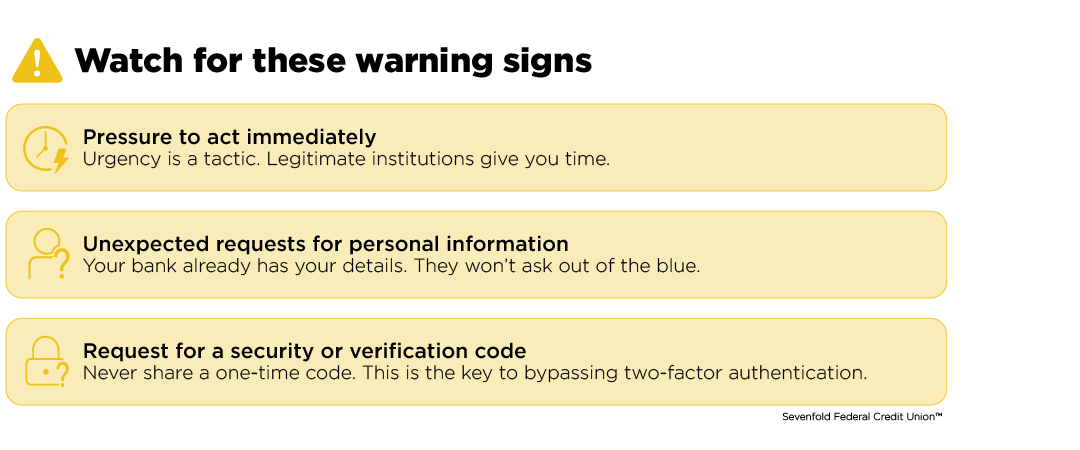
It’s also worth knowing that most spoofing scams are not personally targeted. Scammers use automated software to blast thousands of calls, texts, or emails simultaneously, cycling through phone numbers until someone responds. If you receive one of these, it doesn’t mean your account has been compromised or that someone has singled you out. It means you answered. What happens next is what matters.
Most people assume spoofing scams are about stealing passwords or account numbers. Sometimes they are. But often, scammers are after much smaller details, things most people would share without a second thought. Things like:
- Your account balance or recent transaction history
- Updated contact information
- Answers to security questions
- One-time verification codes sent to your phone
None of these seem like much on their own. That’s exactly the point. Scammers combine these details to build a profile, impersonate you elsewhere, or gain enough credibility to ask for something bigger next time. Be cautious about any request for personal or account information, even if it seems routine.
Why Spoofing Scams Are So Hard to Spot
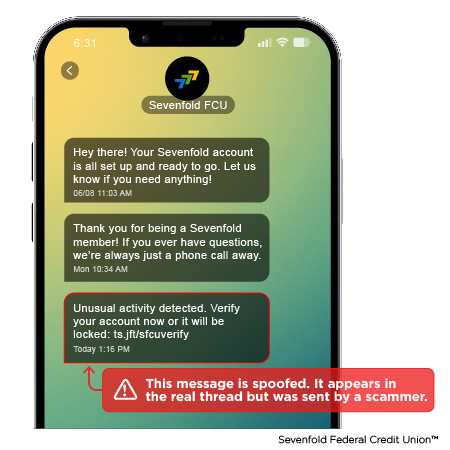
Spoofing scams are effective because they don’t look like scams. There are no obvious red flags. No urgent threats. No glaring spelling mistakes. The caller sounds composed and helpful. The email uses a familiar logo. The text message appears in the same thread as real messages from your financial institution.
On many smartphones, a spoofed text from a number already saved in your contacts will appear inside that existing conversation with no sign anything is out of the ordinary.
In some cases, scammers may already have basic information about you gathered from data breaches, social media, or public records, including your name, your institution, and general account details. That knowledge makes the interaction feel even more convincing.
That’s why protecting yourself isn’t about spotting every scammer. It’s about having a simple process you follow every time someone asks for sensitive information or wants you to act on your account, no matter how legitimate the communication looks.
How to Protect Yourself: Always Verify Independently
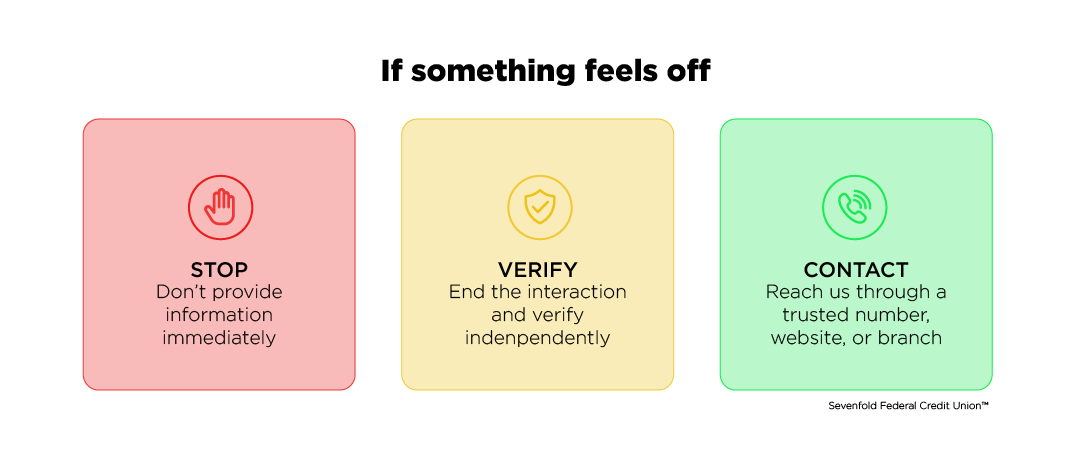
The most effective thing you can do is confirm the source using a channel you control. That means ending the current interaction entirely before giving any information.
Do not call back a number provided in the message. Do not click links in a suspicious text. Do not reply to an email using the contact information it contains. Instead, use a source you already trust: a number from the back of your debit card, your institution’s official website, or your banking app.
Here’s what that looks like in practice:
- Suspicious phone call: Hang up. Call back using a trusted number you know belongs to your institution.
- Suspicious text message: Do not tap any links. Visit the official website directly or call using a verified number.
- Suspicious email: Do not reply or use any contact information in the message. Reach out through a trusted channel instead.
This step matters because it removes the scammer from the conversation entirely. If the original communication was legitimate, the organization will be able to confirm it. If it wasn’t, you’ve protected yourself without losing anything.
We’re Here Before Something Goes Wrong
Credit unions and banks are common targets for spoofing scams. Scammers know members are more likely to respond when a message appears to come from a familiar institution. Knowing that is itself a form of protection.
At Sevenfold, we want to be the resource you turn to before something happens, not just after. Knowing how these scams work is one of the most practical steps you can take to keep your finances and personal information safe.
If you ever receive a communication claiming to be from Sevenfold and something doesn’t feel right, trust that instinct. Pause. Don’t provide information immediately. Reach out through a trusted phone number, our official website, your online banking portal, or by visiting a branch.
We would much rather help you confirm that a communication was legitimate than have you deal with the aftermath of fraud. And if you think you may have already responded to a spoofing scam by sharing information, clicking a link, or providing a verification code, contact us immediately.
Sevenfold Federal Credit Union™ The information provided in this article is for educational and informational purposes only and should not be considered financial, tax, legal, or investment. Before making any financial decisions, please consult with your financial advisor, tax advisor, and other qualified professionals to determine what may be appropriate for your specific circumstances.